win.gg

League of Legends

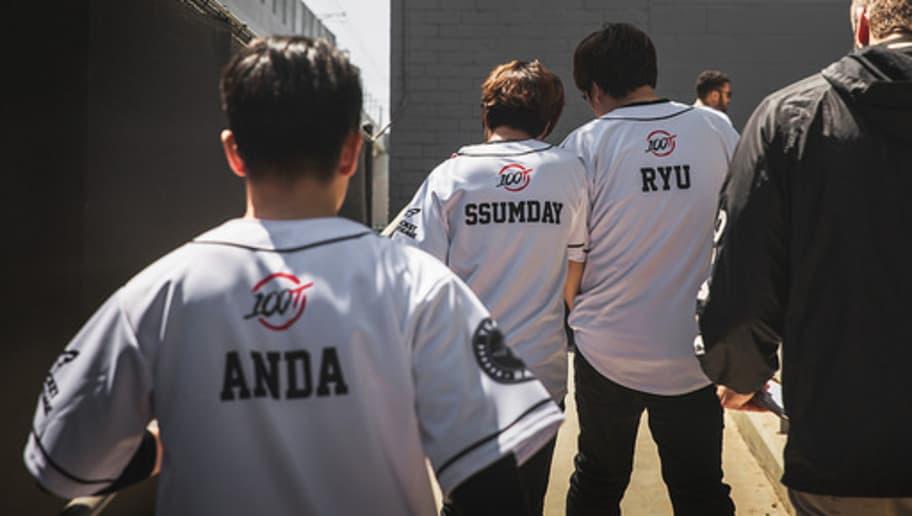
World champion jungler Ambition retires from pro play League of Legends
World champion jungler Ambition retires from pro play Steven Rondina Jungler Kang “Ambition” Chan-Yong has retired from professional League of Legends. The Korean player announced the move on a personal stream on Twitch, saying that he was hanging up his gloves rather than looking for a new home for the 2019 season. “It’s retirement,” Ambition said. “I have settled on retirement. I am so sorry and grateful.” He went on to clarify that this was not prompted by plans to …
SandBox Network acquires new LCK team League of Legends
SandBox Network acquires new LCK team William Davis SandBox Network will enter the biggest League of Legends stage in Korea after acquiring the roster and LCK spot of Team BattleComics. Team BattleComics earned its spot after defeating MVP in the LCK 2019 Spring Promotion series. The team was founded in 2017 and started competing in Challengers Korea during the 2017 spring split. The roster has now been acquired by SandBox, giving the team new official backing. SandBox Network …
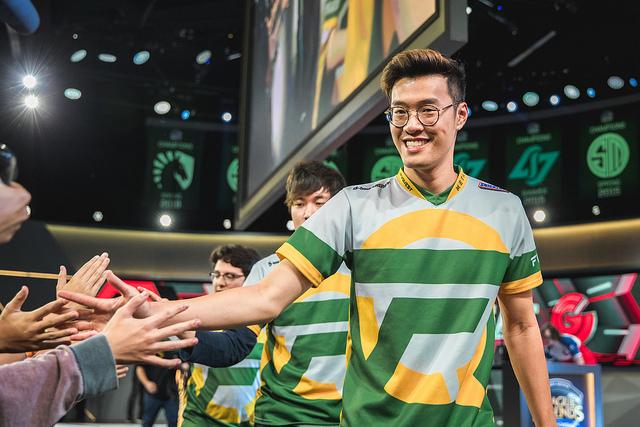
A world champion hopes to elevate OpTic in 2019 League of Legends
A world champion hopes to elevate OpTic in 2019 William Davis OpTic Gaming are hoping that a former world champion can help the team turn over a new leaf in the LCS. OpTic announced the signing of former world champion Lee “Crown” Min-ho, where he’ll join recent acquisitionsWilliam “Meteos” Hartman and Joshua “Dardoch” Hartnett. After an underwhelming year, OpTic Gaming is making big moves. The team announced Crown as the new starting mid laner for the 2019 season. Crown won the …
PowerOfEvil and Wiggily lead CLG’s rebound charge League of Legends
PowerOfEvil and Wiggily lead CLG’s rebound charge gabhernandez Counter Logic Gaming is looking to shake things up after failing to make playoffs in both the spring and summer splits of 2018. CLG’s biggest offseason change is the acquisition of Tristan “PowerOfEvil” Schrage in the mid lane. PowerOfEvil made his name in the EU LCS during his time on Misfits. One of his biggest achievements came during the 2017 World Championship, where PowerOfEvil led his team to take SK …

League of Legends is among the most popular widely-played video games in the world. It has been a consistent trendsetter in the gaming industry, whether as a model for other free-to-play titles looking to monetize their players or as a guiding light for how professional esports can be both successful and sustainable.

But it hasn’t always been so. League of Legends was released in 2009 as an uncertain new project, a game with large aspirations but little proven. In the years since, it has developed into the dominant title that it is today, and one of the biggest games on the planet.

League of Legends drives success of MOBA genre

League of Legends stands out in part because it may arguably be the very first original game released to truly fit into what we now understand to be the popular MOBA genre. MOBA is short for Multiplayer Online Battle Arena, a very particular type of game that emphasizes competition between two opposing teams of players. These games emphasize a mix of competition, tactics, and quick reactions, a potent combination that has proven equal parts popular and durable over the years.

While League of Legends was certainly among the first full releases to focus on the genre and its new ideas, it wasn’t actually the origin point for any of it. That distinction belongs to Blizzard release WarCraft 3, and more specifically a modified game mode titles Defense of the Ancients.

WarCraft 3 was a real-time strategy game that featured prominent hero units who could gain in power as they accrued experience points to level up their abilities, and gold to purchase powerful items. Defense of the Ancients was a user-made game mode which emphasized these heroes by giving each player control over one such hero and teaming them up against an opposing squad of players. It was a dynamite success, inspiring myriad clones and, eventually, an entire genre of games.

But while League of Legends wasn’t the first to bring about these concepts, it was certainly effective in executing on them. Early developers at publisher Riot Games had a clear idea of what they wanted to accomplish with the creation of League of Legends, and it would be hard to argue against their success given the runaway popularity achieved by their iteration on the MOBA formula.

LoL incorporates esports sustainably

Just as impressive as the long-term success of League of Legends as a game is the continued success of the game’s esports scene. While esports has soon multiple peaks and valleys over the years, Riot Games has consistently managed to maintain the prominence of LoL esports. This has been accomplished through an emphasis on regional play and sustainability.

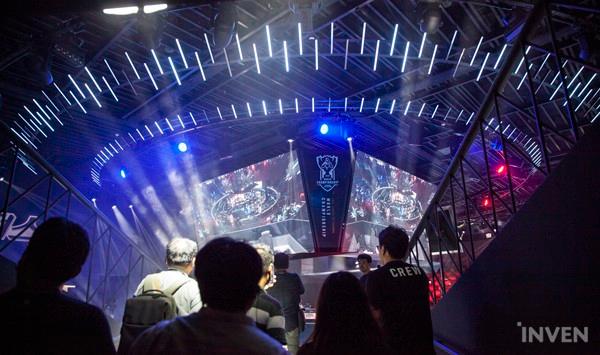
Regional considerations have always been a part of esports and competitive gaming, taking a nod from the Olympic games and its national representations. But Riot took this a step further by formally dividing the world into separate playing regions, and then bringing those regions together for an annual World Championship event at the end of the competitive year.

This allowed for domestic fan followings to develop across such regions as North America, Europe, China, and Korea. Fans would closely follow the teams in their region, and from that familiarity would feel invested in cheering them on when they clashed with teams from other regions at the game’s biggest international event.

This basic blueprint has continued to prove successful for Riot Games over the years, though it has expanded and been modified with time. There are now multiple international events that take place over the course of the calendar year, most prominently including the addition of the prestigious Mid-Season Invitational. The regional leagues have further coalesced, today separated into just five large regional competitions that encompass different parts of the globe.

The basic formula remains the same, however. Encourage fan support at a local and domestic level, and then carry that support and interest over to the global stage. It’s a formula that continues to power League of Legends esports, and looks set to enable it for many years yet to come.