
Here are all Pokémon games in order of their release



- Article updated to include the upcoming 2027 release of Pokémon Winds and Waves.
As the Pokémon franchise is celebrating its 30-year anniversary this year, there are plenty of games to look forward to, but also a lot of great games to look back at. Game Freak, Nintendo, and The Pokémon Company have released a plethora of games for the different Nintendo consoles over the past two decades. The next official game will be Pokémon Winds and Waves, the recently announced 10th generation of mainline titles.
To get a better look at all the Pokémon games in release order, here’s a list starting from the first Pokémon games to the one announced upcoming title (excluding spinoffs and titles like Pokémon GO and Unit).
All Pokémon games in release order
| Order | Game Title(s) | Release Year | Region | Console | Key Features / Notes |
|---|---|---|---|---|---|
| 1 | Red and Green | 1996 | Kanto | Game Boy | First games released (Japan only); introduced Gen 1. |
| 2 | Red and Blue | 1998 | Kanto | Game Boy | First English versions; original 151 Pokémon. |
| 3 | Yellow | 1999 | Kanto | Game Boy | Special Pikachu Edition; Pikachu is the starter. |
| 4 | Gold and Silver | 2000 | Johto | Game Boy | Introduced Gen 2 and 100 new species. |
| 5 | Crystal | 2001 | Johto | Game Boy Color | First time players could choose character gender. |
| 6 | Ruby and Sapphire | 2002 | Hoenn | Game Boy Advance | Introduced Gen 3; focused on Kyogre and Groudon. |
| 7 | FireRed and LeafGreen | 2004 | Kanto | Game Boy Advance | Enhanced remakes of originals; added Sevii Islands. |
| 8 | Emerald | 2005 | Hoenn | Game Boy Advance | Featured Rayquaza; last GBA Pokémon title. |
| 9 | Diamond and Pearl | 2007 | Sinnoh | Nintendo DS | Introduced Gen 4; first dual-screen gameplay. |
| 10 | Platinum | 2009 | Sinnoh | Nintendo DS | Added Giratina; introduced Wi-Fi trading. |
| 11 | HeartGold and SoulSilver | 2010 | Johto / Kanto | Nintendo DS | Remakes; included both the Johto and Kanto regions. |
| 12 | Black and White | 2011 | Unova | Nintendo DS | Introduced Gen 5; added seasonal cycles and triple battles. |
| 13 | Black 2 and White 2 | 2012 | Unova | Nintendo DS | Direct sequels to Black and White; added ~300 Pokémon. |
| 14 | X and Y | 2013 | Kalos | Nintendo 3DS | Introduced Gen 6; first 3DS platform titles. |
| 15 | Omega Ruby and Alpha Sapphire | 2014 | Hoenn | Nintendo 3DS | Remakes of Gen 3; shifted gameplay perspective. |
| 16 | Sun and Moon | 2016 | Alola | Nintendo 3DS | Introduced Gen 7, Alolan forms, and Z-moves. |
| 17 | Ultra Sun and Ultra Moon | 2017 | Alola | Nintendo 3DS | New storyline; introduced legendary Necrozma. |
| 18 | Let’s Go, Pikachu! and Eevee! | 2018 | Kanto | Nintendo Switch | Remakes with physical throwing and open-world spawns. |
| 19 | Sword and Shield | 2019 | Galar | Nintendo Switch | Introduced Gen 8, open-world areas, and raids. |
| 20 | Brilliant Diamond and Shining Pearl | 2021 | Sinnoh | Nintendo Switch | Gen 4 remakes featuring a “chibi” art style. |
| 21 | Legends: Arceus | 2022 | Hisui | Nintendo Switch | Set in the past; shifted toward open-world exploration. |
| 22 | Scarlet and Violet | 2023 | Paldea | Nintendo Switch | Fully open world; rideable legendaries; past/future themes. |
| 23 | Legends: Z-A | 2025 | Kalos | Nintendo Switch | Set 5 years after Gen 6; introduced Dynamic battling. |
| 24 | Winds and Waves | 2027 | TBA | Nintendo Switch 2 | 10th Generation; includes underwater segments. |
1) Pokémon Red and Green Japan (from 1996)

Pokémon Red and Green was the first game to ever be released in Japan. This was a few years before the games came to English and are, therefore, considered the absolute first. The game contains the Pokémon from the first generation with Charmander, Squirtle, and Bulbasaur as the three starters.
While the game was very simple back then, the storyline itself was action-packed and allowed the players to compete through the Kanto region and ultimately become the champion of the Pokémon League.
2) Pokémon Red and Blue English (from 1998)

After the first game was a big hit in Japan, an English version was finally made available in 1998 with the Red and Blue version. These were played on the original Game Boy and had everything a Pokémon fan 20 years ago could dream of. Like the original games from Japan, Pokémon Red and Blue took place in the Kanto region with the original 151 Pokémon available for the Pokédex.
The starters to choose from were again Charmander, Squirtle, and Bulbasaur as players would fight through the Kanto-region gym trainers. After collecting all gym badges, players could take on the Pokémon League and become the champion.
3) Pokémon Yellow (from 1999)

The Pokémon Red and Blue version ended up being a huge success, which led to Pokémon Yellow the year after. Pokémon Yellow is essentially the same game but was referred to as the special Pikachu edition. The special thing about the game was that Pikachu would be the starter Pokémon instead of Charmander, Squirtle, and Bulbasaur. Starting with Pikachu gave players the same feeling as the anime series, where Ash is commonly known to have Pikachu as his main buddy.
The story is once again about collecting the gym badges and beating the Elite Four. As another cool feature, there is a mini-game called Surfing Pikachu, which was only in the Pokémon Yellow version. To this day, Pokémon Red, Blue, and Yellow remain among the best and most nostalgic games.
4) Pokémon Gold and Silver (from 2000)

Pokémon Gold and Silver was the first-ever game to introduce the generation 2 Pokémon. This included a version with the legendary bird Ho-Oh in focus and a version with Lugia in focus. The two games took a lot of inspiration from the original games but had a new storyline in the Johto region. The three starters of these games are also different, as it was the second-generation Pokémon who got the spotlight, including Chikorita, Cyndaquil, and Totodile.
Compared to the original games, there were 100 new Pokémon species to catch in Gold and Silver, and players were allowed to give Pokémon nicknames when captured. Also, the Elite Four was updated in these games and introduced Lance with his Dragon-type Pokémon, which was one of the hardest battles in the entire game.
5) Pokémon Crystal (from 2001)

Pokémon Crystal was the second game to be introduced in the Johto region. The game included Pokémon from generation 2 just like Gold and Silver, but had even more new features in store. One of them was that players could choose a gender for their character, which was never possible in the games beforehand.
Pokémon Crystal was played on Game Boy Color just like Gold and Silver but had improved graphics and layouts throughout the game. It also had the legendary dog Suicune in focus despite being a Pokémon from the first generation.
6) Pokémon Ruby and Sapphire (from 2002)

For the very first time, generation 3 was introduced through the games Pokémon Ruby and Sapphire in 2002. The game was played on Game Boy Advance and was the first of a new Pokémon era. The game takes place in the Hoenn region and has new legendary Pokémon such as Kyogre and Groudon in focus.
The way the game mechanics worked is once again very similar to previously, as players didn’t grow tired of the Pokémon game style. Instead, a plethora of new Pokémon were introduced alongside new gym leaders and trainers. At the end of the game, a new Elite Four was introduced where the champion uses Steel-type Pokémon.
7) Pokémon FireRed and LeafGreen (from 2004)

Pokémon FireRed and LeafGreen is the second game during the third generation but had some of the original starters in focus with Charizard and Venusaur. The game is an enhanced version of the original ones, bringing some nostalgia to the player base back in 2004 which wasn’t the last time Game Freak catered towards nostalgia.
As a remake of the original games, the game had much better graphics and colors that gave the games a completely different vibe. FireRed and LeafGreen also introduced a new small region down south called Sevii Islands.
8) Pokémon Emerald (from 2005)

To the last Pokémon game in generation 3 and the first one to have Rayquaza in focus. This was the last Pokémon game released for the Game Boy Advance and is to this day one of the most sought-after games for collectors, besides the original ones. Pokémon Emerald has slightly better graphics than previously but wasn’t really revolutionary because it was still played on an older console.
Just like the cover of the game, the theme of the game has a pretty emerald green color just like Rayquaza itself. In the game, it’s as always about collecting gym badges and catching all Pokémon with a few new features such as a phone.
9) Pokémon Diamond and Pearl (from 2007)

A new era and console entered the world of Pokémon games when Diamond and Pearl was released in 2007. It had been two years since the latest Pokémon game, which put a lot of pressure on this one. At the time, Pokémon went through a bit of a rough period and Diamond and Pearl did a good job at rekindling the interest in Pokémon.
The game takes place in the Sinnoh region, where the fourth generation of Pokémon became available. This included Piplup, Turtwig, and Chimchar as the starters who would join along on the journey to defeat all gym leaders. The game was released as the first for the Nintendo DS, which was a console that provided a whole new game experience with two screens.
10) Pokémon Platinum (from 2009)

Pokémon Diamond and Pearl ended up being a big success and lived on for quite a while. It took two years before the next game in line was released, which was Pokémon Platinum in 2009. Just like Diamond and Pearl, Pokémon Platinum had the two legendary Pokémon Dialga and Palkia in it. To spice up things, even more, Giratina was added as it is seen on the cover of the game.
The game itself had very good graphics on the Nintendo DS and had a general feel of a northern environment. The characters wore warmer clothes than in previous games, suited for the cold weather of the Sinnoh region. Pokémon Platinum was also the game to really introduce Wi-Fi through trading and small mini-games.
11) Pokémon HeartGold and SoulSilver (from 2010)

Another Pokémon remake came out in 2010 and this was a big one. Pokémon HeartGold and SoulSilver was a remake of Gold and Silver, including the legendary birds Ho-Oh and Lugia once again. This game recreated the old one with amazing graphics and a game that could entertain players for many hours.
The special thing about HeartGold and Soulsilver is that they included two regions. Players started in the Johto region but were then able to travel to Kanto after defeating the Elite Four. This made up for the longest Pokémon game so far and is possibly the best release yet.
12) Pokémon Black and White (from 2011)

After a big success with Pokémon HeartGold and SoulSilver, it was time for a new generation and era in 2011. The Black and White era included the fifth generation of Pokémon and took place in the Unova region. Like any other new region, Black and White had three new starter Pokémon to choose from with Snivy, Tepig, and Oshawott.
The game itself was released for the Nintendo DS as the second game ever and had improved graphics and even a seasonal cycle. Black and White was also the first game to take battles to another level and include triple battles. Another new feature in Black and White was the speech balloons that appear when someone is talking, to help see which character was speaking. These would, later on, be removed again.
13) Pokémon Black 2 and White 2 (from 2012)

As a follow-up to Black and White, Pokémon released Black 2 and White 2 just after one year. These were sequels to Black and White and also contain the generation 5 Pokémon. For Black 2 and White 2, a big number of new Pokémon were available. In fact, there were around 300 new Pokémon to go catch.
Just like the other games, every player has a rival that will follow along the journey in the fight for all gym badges. For Black 2 and White 2, both the main character and the rival starts the adventure from the beginning.
14) Pokémon X and Y (from 2013)

2013 was the year of yet another Pokémon era and a switch in the platform. The X and Y games were released to the Nintendo 3DS, which was essentially an upgraded version of the Nintendo DS. The game was released with the sixth generation of Pokémon and included new mythical beasts such as Xerneas and Yveltal.
Again, the goal was to defeat the Pokémon champion while another group of bad people got introduced in X and Y. Instead of the well-known Team Rocket, X and Y had Team Flare who tried to spoil all plans.
15) Pokémon Omega Ruby and Alpha Sapphire (from 2014)

Next up in the Pokémon era were Omega Ruby and Alpha Sapphire, which was released in 2014 for Nintendo 3DS. These games are remakes of the original Pokémon Ruby and Sapphire from 2002 and of course, had both Kyogre and Groudon return to the screen. The game had a big variety of Pokémon and plenty of challenges for players to complete.
The storyline had also gotten a notch up as well as the graphics that really didn’t look like anything from the original games. What’s special about the gameplay in Omega Ruby and Alpha Sapphire is that Game Freak introduced a bit of a different gameplay perspective compared to the old ones where players would look from a birds perspective.
16) Pokémon Sun and Moon (from 2016)

Two years after the remake of Ruby and Sapphire, the most recent Pokémon era began. It was the seventh generation of Pokémon called Sun and Moon. Just like in the TCG, Sun and Moon revolved around Solgeleo and Lunala who represented the Sun and Moon respectively. The two legendary Pokémon were very important in the storyline which took place in the Alola region. In this region, Alola versions of some of the older Pokémon appeared such as Alolan Vulpix and Alolan Meowth.
The game itself has 81 new Pokémon to chase and introduced the “Z-moves” along with other new battle mechanics.
17) Pokémon Ultra Sun and Ultra Moon (from 2017)

The Sun and Moon era concluded in 2017 with Ultra Sun and Ultra Moon. This was a game with a completely new storyline despite taking place in the Alola region like the original Sun and Moon game. This game was the last to be released on Nintendo 3DS, shortly before the Nintendo Switch was released for the first time.
The Ultra Sun and Ultra Moon games were never the biggest hits but still had some amazing graphics and game mechanics. A few different mini-games were introduced and a brand new legendary Pokémon called Necrozma.
18) Pokémon Let’s Go, Pikachu! and Let’s Go, Eevee! (from 2018)

Pokémon Let’s GO Pikachu and Eevee are the most recent remakes of the original games. It was released in 2018 for the Nintendo Switch and included a lot of completely new mechanics. With inspiration from the popular mobile game Pokémon GO, the game had players throw Pokéballs in a more physical way to capture Pokémon.
As with the old games, Let’s GO takes place in the Kanto region and has all the original 151 Pokémon from the first generation. Unlike the older games, Let’s GO removed the tall-grass encounters and instead had Pokémon spawn in the open world for the players to see. This made it easier to hunt certain Pokémon and their shiny versions.
19) Pokémon Sword and Shield (from 2019)

Generation 8 is Pokémon Sword and Shield. In this title, new forms of existing Pokémon, much like in Alola, appeared alongside new Gen-8 Pokémon themselves. Pokémon Sword and Shield also introduced the two new legendary Pokémon, Zacian and Zamazenta.
The game itself is very unique compared to other Pokémon releases, as it has open-world areas you can explore and catch Pokémon in. This means that everything is seen from a new perspective, with a lot of room to run around and explore the fields of Galar. It also introduces raids, which are now a staple of the other games.
20) Pokémon Brilliant Diamond and Shining Pearl (from 2021)
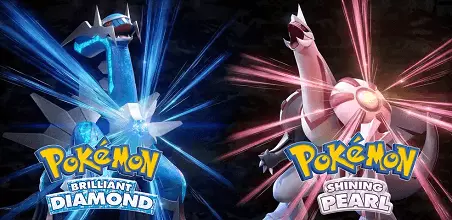
Brilliant Diamond and Shining Pearl came out in 2021, and it serves as a remake of the Generation 4 games. It reintroduced fans to starters Turtwig, Chimchar, and Piplup. It was released on the Nintendo Switch, joining plenty of available titles on the console.
This particular remake was extremely faithful to the original, but with one major shift. It was redone in chibi art style, much like when Nintendo remade The Legend of Zelda: Link’s Awakening. It was also not developed by Game Freak, instead being done by ILCA.
21) Pokémon Legends: Arceus (from 2022)
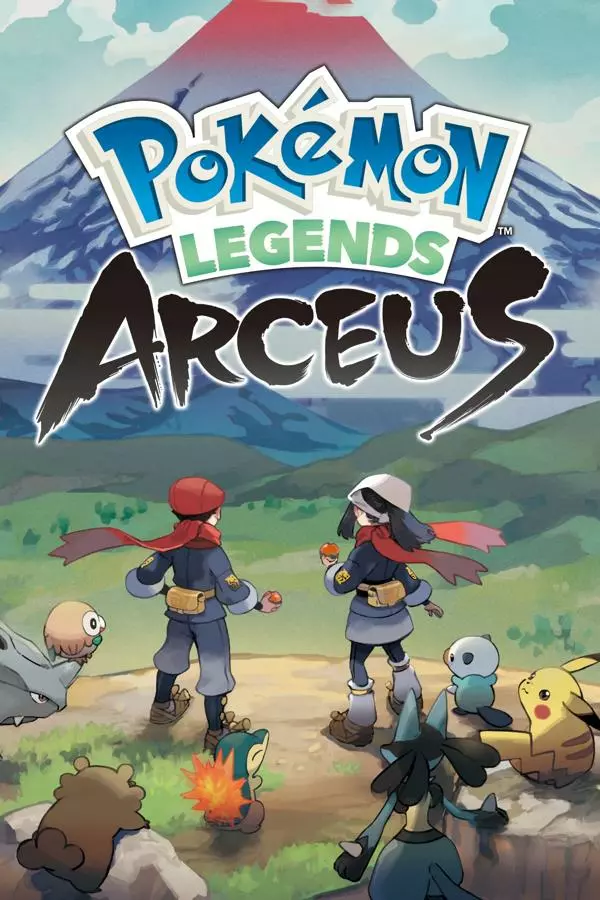
Legends: Arceus was the first game of its kind. Instead of making a new generation or remaking an old one, it did something different. It sent players back into the distant past. The Hisui region, which is the historical version of Sinnoh, is the setting.
It also began the shift into an open world by making pretty much every area in the game large and free to roam. Players could not just wander from area to area, so it merged the map mechanics of old games with the new by blocking some things off but leaving it mostly open.
22) Pokémon Scarlet and Violet (from 2023)
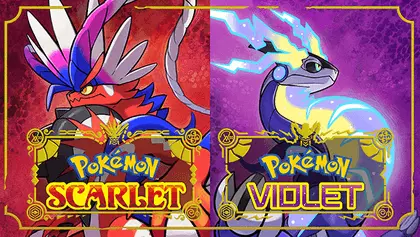
Pokémon Scarlet and Violet continued the evolution of Arceus by making everything fully open. The entire world could be crossed, and to further make it unique, The Pokémon Company made the Legendary Pokémon, Miraidon and Koraidon, rideable mounts to traverse the world.
What makes this game even more unique is the endgame. It’s rare for the two versions of one game to differ so much, but Scarlet allowed players to explore the distant, prehistoric past, while Violet sent players into a chrome-filled future. The Pokémon found there were unique versions of current-day creatures, adding a level of familiarity while remaining unique.
23) Pokémon Legends: Z-A (from 2025)
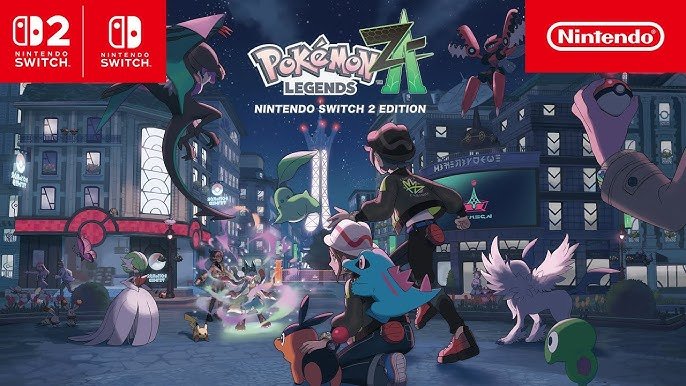
Legends: Z-A didn’t mirror Arceus in every way, but it did take elements from it and further redefined Pokémon games. It’s set in Lumiose City, the city from the Kalos region of Gen 6. It’s not an exploration of the past like Arceus or the distant future like Violet. It’s only the immediate future; five years later, exploring what happened in the aftermath of the Gen 6 games.
Legends: Z-A also introduced a new wrinkle to the decades-old battle system. Dynamic battling allows players to be much more engaged than the typical turn-based combat, and the game expanded on the Mega Evolution system by adding more Megas to the Pokédex.
24) Pokémon Winds and Waves (release 2027)
There is just one mainline game currently announced: Winds and Waves. It will come out in 2027. It looks to be a further evolution of what Scarlet and Violet set out to do, opening the entire world up. This time, based on early marketing, it appears that it includes an underwater segment, where some Pokémon will spawn deep beneath the waves. The estimated release date is sometime in 2027, though we don’t know when. It’ll be an exclusive Nintendo Switch 2 title.
Read Also
 Movies & TV
 Kick
Kick
 Dota 2
 Twitch
 News
News
 GTA
GTA
 News
News