
Opinion: Is Esports Tracing the Same Evolutionary Path As Traditional Sports?

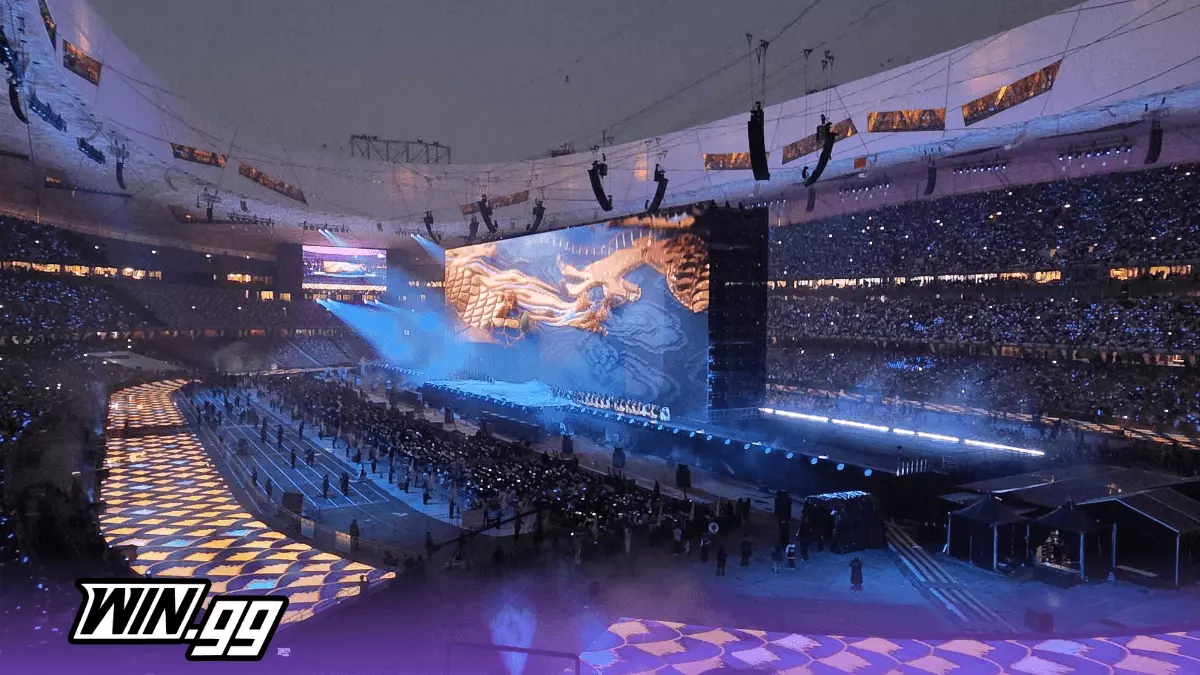
What happens when an industry compresses centuries of sporting evolution into less than a decade or two?
Communities become global audiences overnight, rivalries spread through social media within minutes, and tournaments turn into entertainment products faster than ever before. And so what took traditional sports centuries to build has taken esports a fraction of that.
From local communities to sold out arenas, and from informal matches to Olympic-style events, the history feels familiar, yet the speed at which it is happening is new.
Technology removes many of the slow steps that once defined the growth of sport, so what used to take generations now happens in years. But that speed also brings its own pressure, as questions around financial stability and long-term direction emerge much earlier than they did in traditional sport.
A sport for a new generation
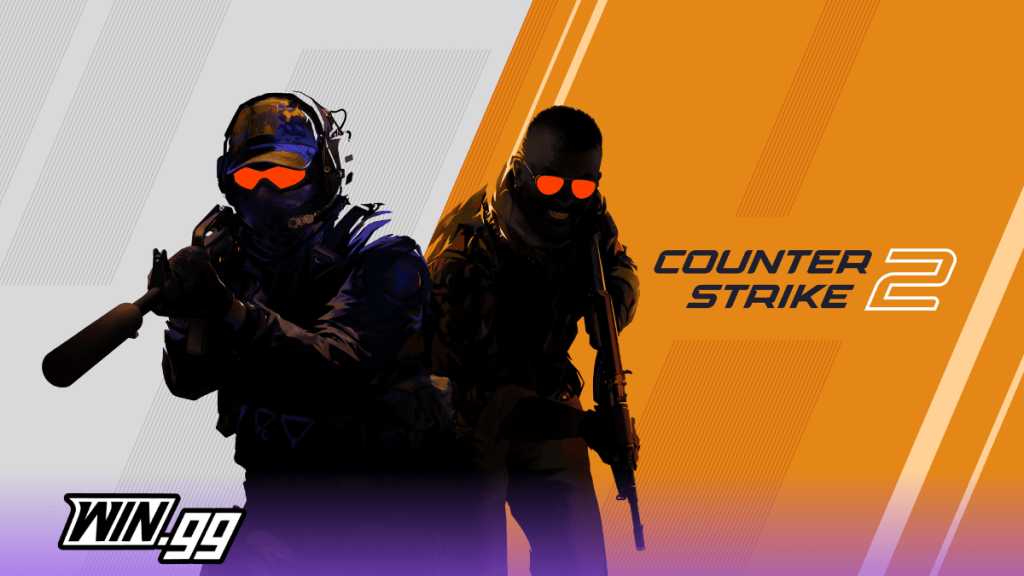
Image credit: Valve
Esports is not just a digital version of sport, it is built on entirely different foundations that shape how it is played, consumed and controlled.
In traditional sports, no one owns the game itself. Volleyball or swimming exist independently of any single organisation. In esports each game is owned by a company, for example Valve published Counter-Strike, which has become one of the most long-lived esports titles. And so publishers hold the keys: they decide how the game evolves, how competitions are run, and sometimes even who gets to participate, which gives the system a level of control that is both efficient and also a little fragile, because if the publisher changes direction, the whole ecosystem built on its game has to follow.
Then there is regulation, or in some cases the lack of it. Traditional sports have built up governing bodies over decades, with rules, protections and systems that try to keep things fair and stable. Esports is still figuring that part out. Some regions, like South Korea or France, are more structured than others; some games, like VALORANT, have clearer ecosystems than others, but overall it is still a bit of a mixed bag. Sure, this allows for some flexibility, but it also creates uncertainty around fairness, protection and long term structure of the ecosystem.
Then comes the predominantly-online audience, shifting their loyalty with one click. People are not tied to a stadium or a weekly schedule, they can jump in and out whenever they want, watch a match, switch to another stream, or even another team, follow a creator, or just scroll through highlights, all within minutes. This creates a level of access that traditional sports cannot easily match, yet it also means attention is harder to hold, as audiences are always one click away from something else.
All of this creates a system that is constantly on. There is always something happening, always something to watch, which is great for keeping people engaged, but it also makes it harder to make those moments feel special.
When everything is available all the time, nothing really feels out of reach, yet those peak moments are often what build long term memory and emotional connection, so esports finds itself balancing between being always present and still trying to create something that should feel unmissable for its always-on audience.
The shared evolution between sports and esports
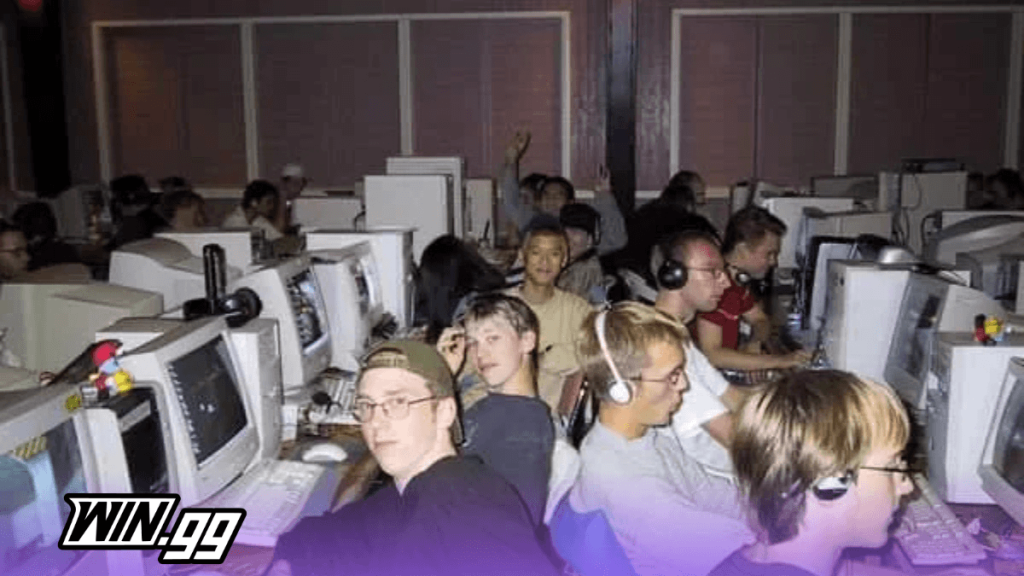
Image credit: k4rst3n/Reddit
If we look at the beginning, competition was never just about winning. The ancient Olympic Games — often seen today as the origin of sport — were not created purely for competition, but were only one part of a much larger cultural event. In this sense, sport did not start as “sport” in the modern meaning, but as a shared experience where competition and celebration were all connected.
This matters because it shows that from the very beginning, competition and entertainment were not separate.
If we look at the bigger picture, both sports and esports follow a similar path of development, even if they begin from very different places. Activities often start as simple forms of play or competition, then grow into structured systems, attract audiences, and eventually become commercial products shaped by entertainment value and cultural attention.
However, while traditional sports moved from play to structure and only later to commercialisation, video games often began as commercial products from the start, created, sold and distributed within a market. Over time, this developed competitive scenes that followed a path much closer to that of sport — and this is also reflected in how different countries and institutions still struggle to define esports itself.
Some countries, like South Korea, recognise esports as a sport while others continue to classify it more generally as gaming or entertainment. In the UK, for example, esports is still officially treated more as a game than a sport, while in Italy esports largely falls under the wider ‘gaming’ umbrella, which also includes gambling-related activities and regulation.
This creates a fragmented landscape where esports is culturally accepted in many places, but not always institutionally recognised in the same way traditional sports are.
And at the same time, not all sports began as formal systems. Some emerged from simple games created for fun, such as tag, which over time evolved into structured disciplines and today are even connected to organised competition. So if we were to account for that, esports, in its earliest form, started much closer to what we now call pure competition.
Early video game contests were based on simple goals such as achieving the highest score or finishing a game faster than others, often played alone or in small groups without audiences, structure or narrative. However, just like early athletic contests, these moments still created a sense of community, a shared moment between people passionate about the same hobby. But they lacked the broader cultural layer that would come later.
LAN events brought players together physically, but still without large scale production or storytelling. The shift came when these competitions began to be shared online, as audiences could now watch, follow and return. This is the same turning point that sport experienced centuries earlier, when competition moved from being an activity to becoming something that could be observed, copied, and remembered over time, whether it was on TV or in magazines and newspapers and now online.
However, the key transformation is not structure alone, but in meaning. As rivalries form, as players become known figures, and as events gain identity, competition becomes part of a larger narrative.
But where does it stop being only about performance and starts becoming entertainment? What took centuries for sport to develop, from ritual gatherings to organised global events, has taken esports less than two decades, but this is not because esports is fundamentally different, rather because technology accelerates every stage of cultural evolution.
Yet despite this speed, the pattern remains the same, as both sports and esports follow a shared trajectory: from competition, to structure, to audience growth, to commercialisation, and finally to becoming a form of entertainment that people return to not just for the result, but for the experience.
Where do we draw the line between sports and esports?
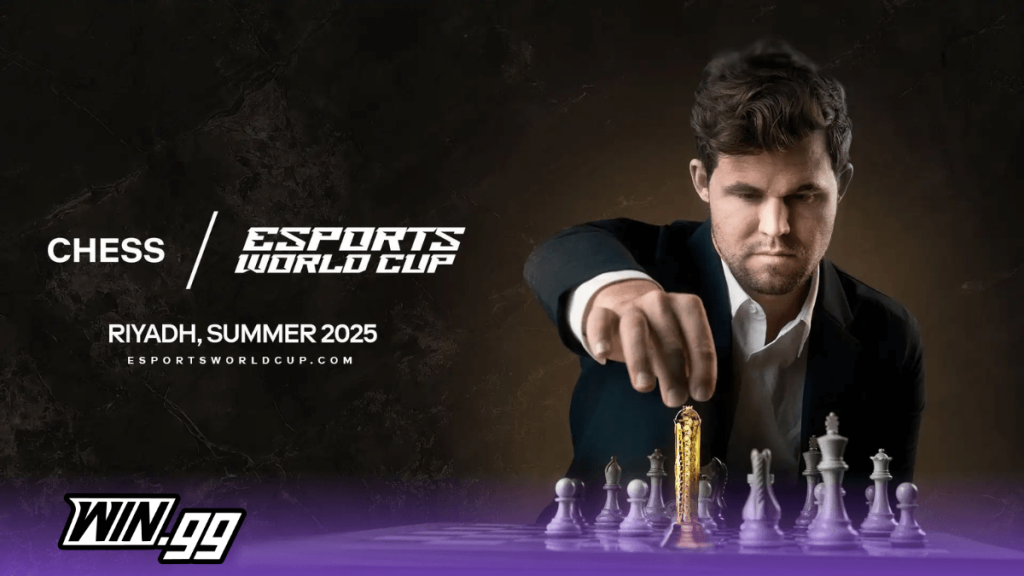
Image credit: Esports World Cup
While some say that the distinction between esports and traditional sport is definitive, that line becomes increasingly difficult to define. What once felt like two separate worlds now shares more similarities than differences, not only in how competitions are organised, but also in how they are experienced by audiences.
Esports players train with discipline, focus and routine, much like traditional athletes, and teams operate as structured organisations with coaches, analysts and support staff. Formula 1 teams, for example, increasingly use advanced racing simulators as part of driver preparation, while football clubs have experimented with virtual tactical and reaction-based training systems. Chess has also crossed over into esports, having been added to the Esports World Cup and Esports Nations Cup, with esports organisations also signing chess players over the years. And to top it all off, streaming is now a key part of how sports are consumed.
This similarity in structure has also made collaboration more natural, with traditional sports organisations entering esports through specific teams or sponsoring solo pro players. Football clubs such as Manchester City and Wolverhampton Wanderers have invested directly into esports operations, building competitive FIFA/FC and broader esports divisions as part of their global brand strategy.
Brazilian football star, Neymar, has also become closely associated with esports culture thanks to his countless hours on Counter-Strike, streaming and gaming communities, showing how athletes themselves increasingly move between both worlds. And we can also see this crossover in teams like Passion UA, which footballer Oleksandr Zinchenko founded. Zinchenko, who plays for Ajax, built the organisation to compete at a high level in esports. Today, Passion UA sits at rank 34 out of 362 teams worldwide in the HLTV rankings, which shows how traditional athletes now take active roles in shaping esports teams and not just supporting them from the outside.
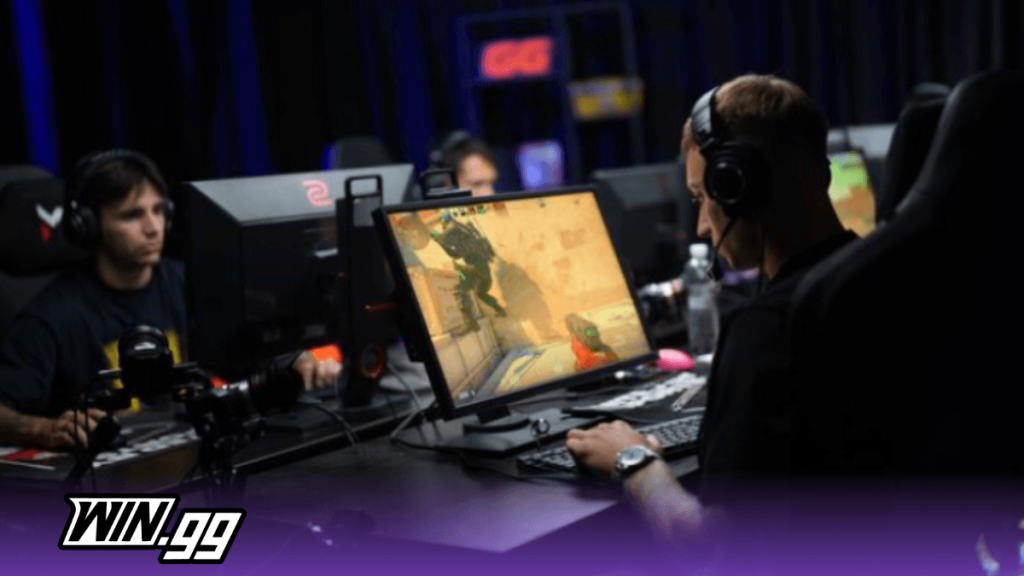
The 2025 Match of LeGGends: Derby on a Server showmatch. Image credit: GG.BET.
Showmatches between esports teams and traditional sports organisations also are becoming increasingly popular. Former Barcelona footballer Gerard Piqué’s Kings League — a seven-a-side football competition built around streamers and an interactive digital audience — blends traditional sport with internet entertainment culture in a way that closely mirrors esports broadcasting. Hybrid events can attract strong interest from both audiences, like the 12K peak viewers, according to Esports Charts, of the GG.BET Match of LeGGends: Derby on a Server between NAVI and FC Dynamo Kyiv on CS2.
Even institutions traditionally associated with sport have started exploring esports more directly. The International Olympic Committee launched the Olympic Esports Series in 2023, initially to be held in Saudi Arabia before the partnership between IOC and the country fell apart in 2025.
And with that we’d have to consider both how viewership is measured but also how audiences engage with both sports and esports beyond cheering or special media engagement — for example, through betting, which has become one of the clearest shared touchpoints between the two worlds.
Sport and esports’ audiences betting behaviour
Esports betting has increasingly become part of the wider esports ecosystem as a layer of engagement that mirrors traditional sports. Betting sponsors have entered esports in a similar way to football or basketball, and in some cases publishers themselves have started to allow it within regulated frameworks. Riot Games, for example, has opened selected parts of its esports ecosystem to betting sponsorship under controlled conditions, and this overlap also shows up in user behaviour.
GGBET UA data from 2024 shows that 80% of all bets on the platform went to traditional sports, but 74% of Ukrainian users who bet on CS2 and Dota 2 also bet on football. This suggests that many users do not choose between esports and traditional sports, but instead follow both and move between them depending on the event.
Esports may still be newer, but the way people engage during big matches — placing bets, reacting in real time, and following outcomes — is increasingly close to how fans behave in traditional sports. This might be especially clear when comparing peak events between the two ecosystems.
Just like major football finals or global tournaments in traditional sports, esports events such as world championships now create sharp spikes in attention and betting activity, while smaller matches see much lower engagement. However, in an interview with EGR, GG.BET explained that esports users tend to be younger and more active in live betting, while traditional sports bettors often focus more on long-term outcomes, showing how yes, the two audiences overlap, but still behave differently.
Many traditional bookmakers have also embraced esports over the years, offering match odds in a variety of tournaments.
In 2022, Variety Intelligence Platform and market research firm released a study exploring how sports betting is improving engagement with televised games, which discovered that it motivates fans to watch because of their own bets, or a rooting interest derived from their betting activity. And it also raises the pressure on how events are managed and monitored.
Overall, there is still some resistance to calling esports a sport, with many arguing that it lacks the physical element or does not fit traditional definitions. But this opens up a wider question about how we define sport itself. If games like chess are already recognised, then maybe the issue is not whether esports wants to become like sports, but rather the opposite. And esports being recognised as a sport can open up funding opportunities.
In just a few years, thanks to the technological advance, esports seemingly followed the same path sports took millennia to carve. So now the question shifts from whether esports, as an industry, can grow to whether it can hold the attention of its millions of viewers, reach a global structure, and remain culturally relevant in the long term just as much as sports has.
Feature image credit: King Pro League (KPL) / TiMi Studio Group
 Cecilia Ciocchetti
Cecilia Ciocchetti is a freelance writer exploring the gaming, esports, and entertainment industries. Growing up playing games and discovering new music shaped her curiosity for the stories behind them. Today, she turns that curiosity into features that shed a light on the people and moments shaping gaming and entertainment.
View full profileRead Also
 Counter-Strike
 Counter-Strike
 Valorant
 Counter-Strike
 Counter-Strike
 Counter-Strike
 Counter-Strike